
Data Repository Introduction
Overview
The Data Repository is a core feature of the Accelerator platform, purpose-built to empower users with scalable, secure, and intuitive tools for managing large-scale datasets. Whether you're working with structured tables, unstructured media, or complex analytical inputs, the Data Repository provides a unified space to store, process, explore, and collaborate on data assets.
Accessible via both a modern web-based interface and a powerful terminal client, the platform adapts to a wide range of technical workflows. It integrates seamlessly into data pipelines and supports both human-in-the-loop workflows and fully automated data processing systems.
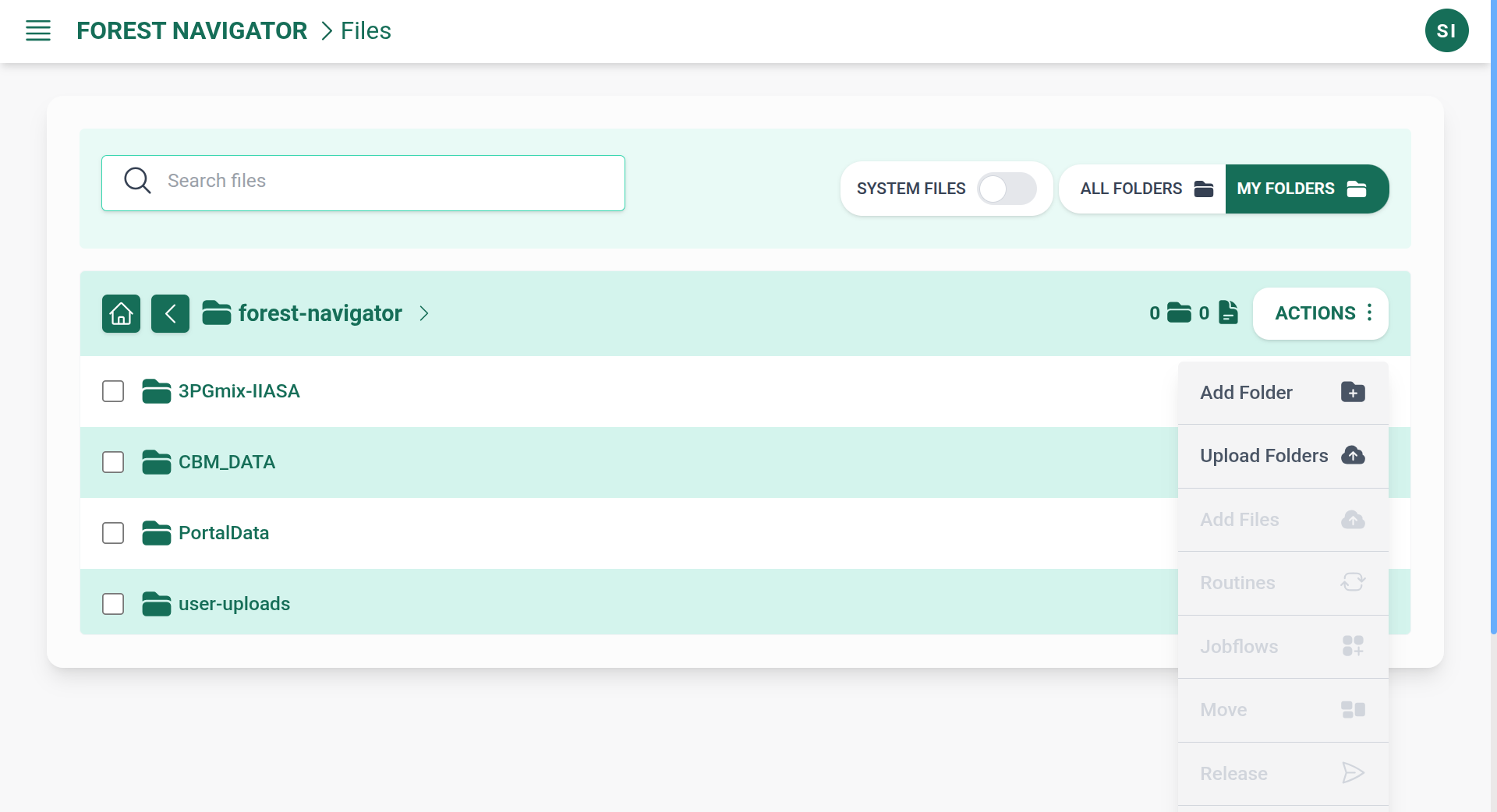
Features
The Data Repository comes packed with a rich suite of capabilities designed to simplify data lifecycle management and accelerate time to insight:
File and Folder Upload/Download
Easily upload and download individual files or entire directories, regardless of size. Large datasets can be transferred efficiently, enabling high-performance data ingestion and retrieval.Routine Execution
Automate repetitive tasks by running predefined routines or processing modules on selected datasets. Routines can be triggered manually or integrated into a larger data workflow.- Public File Sharing
Share datasets or results with external stakeholders by marking files as public. Public links and RESTful APIs make it easy to embed data access into websites, dashboards, or third-party services.
- Public File Sharing
Dataset Catalog API
Every repository is automatically backed by a dataset catalog API, which indexes contents for external integration and enables dynamic web interfaces or internal tooling.Routine Output Storage
Store not just input files but also intermediate and final outputs produced during data processing. This ensures reproducibility and clear data lineage.Data Exploration and Visualization
Preview, analyze, and visualize datasets directly from the web interface, allowing teams to understand their data quickly without downloading or preprocessing.Web API Access
All datasets are accessible through a robust, well-documented web API. This enables integration into custom applications, automated workflows, and third-party data tools.
Storage and Access Control
The platform is built on top of cloud-based object storage technology that offers both scale and speed. It is engineered to deliver low-latency, high-throughput access to data, particularly when co-located with compute clusters.
Scalable Object Storage Backend
The repository can store petabytes of data across thousands of files without performance degradation, making it ideal for big data workloads.Support for All Data Types
Structured (e.g., CSV, Parquet, JSON) and unstructured data (e.g., images, videos, binary blobs) are supported equally well.Big Data Streaming and Transfer
Bulk upload and streaming tools ensure that even massive datasets can be moved in and out of the system efficiently.Low-Latency, High-Throughput Access
By operating in proximity to compute infrastructure, the repository reduces data access latency and increases throughput — critical for analytics and machine learning workloads.Role-Based Access Control (RBAC)
Sophisticated access control mechanisms allow administrators to define who can view, edit, or share specific datasets, ensuring secure collaboration.
Use Cases
The Data Repository supports a wide range of workflows, making it a foundational component for teams working across research, engineering, and data science:
Collaborative Dataset Sharing
Serve as a centralized location for storing shared datasets, enabling teams to collaborate without the friction of file transfers or inconsistent data versions.Model Input Preparation
Organize and prepare structured input data for training and inference stages in machine learning pipelines.Computation and Indicator Generation
Trigger automated modules or routines to enrich datasets by computing derived metrics, indicators, or analytical summaries.Archival and Reproducibility
Preserve both raw and processed data in a version-controlled environment to ensure long-term reproducibility of analyses and experiments.External Data Integration
Use APIs to programmatically access datasets in custom dashboards, web apps, or other digital platforms.